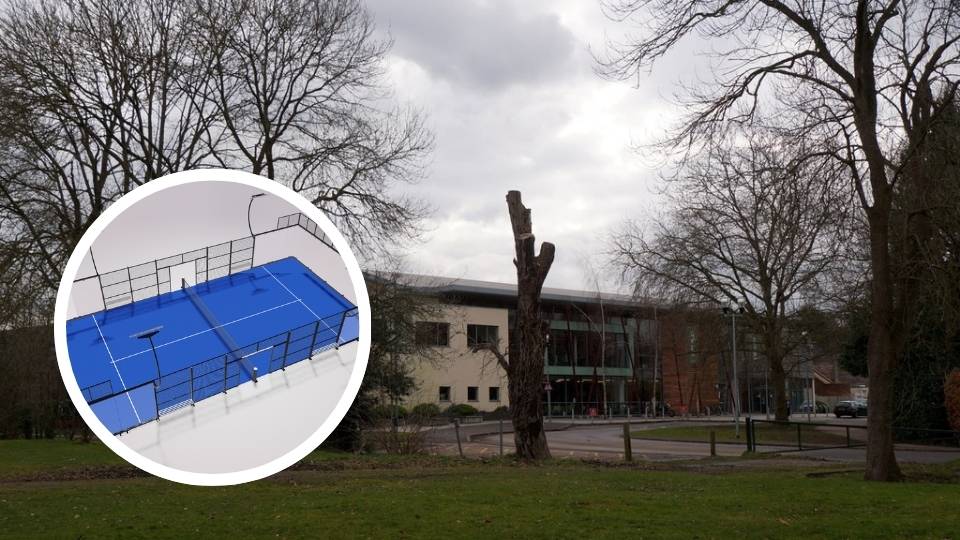
As tennis continues to dominate as the premier racket sport, padel and pickleball are swiftly rising in popularity, establishing distinct markets and experiencing significant growth, sparking a revolution in racket sports.
In 2022, pickleball was identified as the fastest-growing sport in the United States. Concurrently, padel is quickly becoming one of the fastest-growing sports on a global scale.
The Roots of Padel and Pickleball
Though padel and pickleball might appear as mere offshoots of tennis, the differences are substantial.
Padel began in 1969 when Enrique Corcuera set it up at his residence in Mexico, blending elements from tennis and squash. The game was uniquely designed with enclosed walls, allowing balls to be played off them. This innovation led to its rapid adoption in Spain and Argentina, culminating in the first World Championship in 1992.
Pickleball, on the other hand, was invented in 1965 by three fathers on Bainbridge Island, Washington, as a pastime for their children. It emphasises precision and strategic play over speed, which has helped it grow in popularity by appealing to a variety of players.
Gameplay and Scoring Differences
Padel is typically a doubles sport where the ball can rebound from walls, and matches are played over three sets. Winning requires leading by two sets, each comprising six games.
Pickleball can be played as singles or doubles and incorporates a two-bounce rule; points are scored to 11, with a necessity to win by at least two points.
Padel is known for its quick pace, while pickleball is recognised for its strategic, slower-paced game, making it more approachable in the U.S.
Business Dynamics within Racket Sports
The construction of new padel courts is increasing globally. According to Playtomic’s Global Padel Report 2023, it’s projected that by 2026, there will be around 85,000 padel courts worldwide. Market analysis in 2022 highlighted padel’s appeal across various ages and skill levels, noting its lower setup costs compared to tennis.
Padel continues to attract attention, with Deloitte’s 2024 Sports Investment Outlook suggesting that investors are keen on expanding sports like padel, due to their growth potential and the strategic development of new assets.
Pickleball offers a more accessible option, suitable for a broader range of physical abilities and is ideal for business networking. The Association of Pickleball Professionals indicated in March 2023 that nearly 50 million Americans had played the sport in the previous year.
The market for pickleball is expected to diversify with new products and heightened competition as consumer expectations evolve. This presents a prime opportunity for North American markets to capitalise internationally.
Expertise and Expansion Needed
Now, more than ever, padel and pickleball require skilled professionals to further their development. From manufacturing to event management, the potential for small businesses to emerge as leaders is significant.
Worldwide Popularity and Business Opportunities
According to the International Padel Federation, over 25 million people in more than 130 countries play padel, generating an industry worth approximately 2 billion euros. This popularity, especially in Spanish-speaking countries, offers ample opportunities for business expansion and collaboration.
Similarly, a January 2023 report by the Association of Pickleball Professionals showed that 8.5 million Americans engaged with the sport frequently in 2022. Its growth in North America and potential in other markets make both padel and pickleball attractive for entrepreneurs looking to invest in these dynamic sports. Both sports offer unique opportunities; while padel has a vast, diverse market reach, pickleball is lauded for its accessibility and potential for international growth.
Article information provided by Forbes.